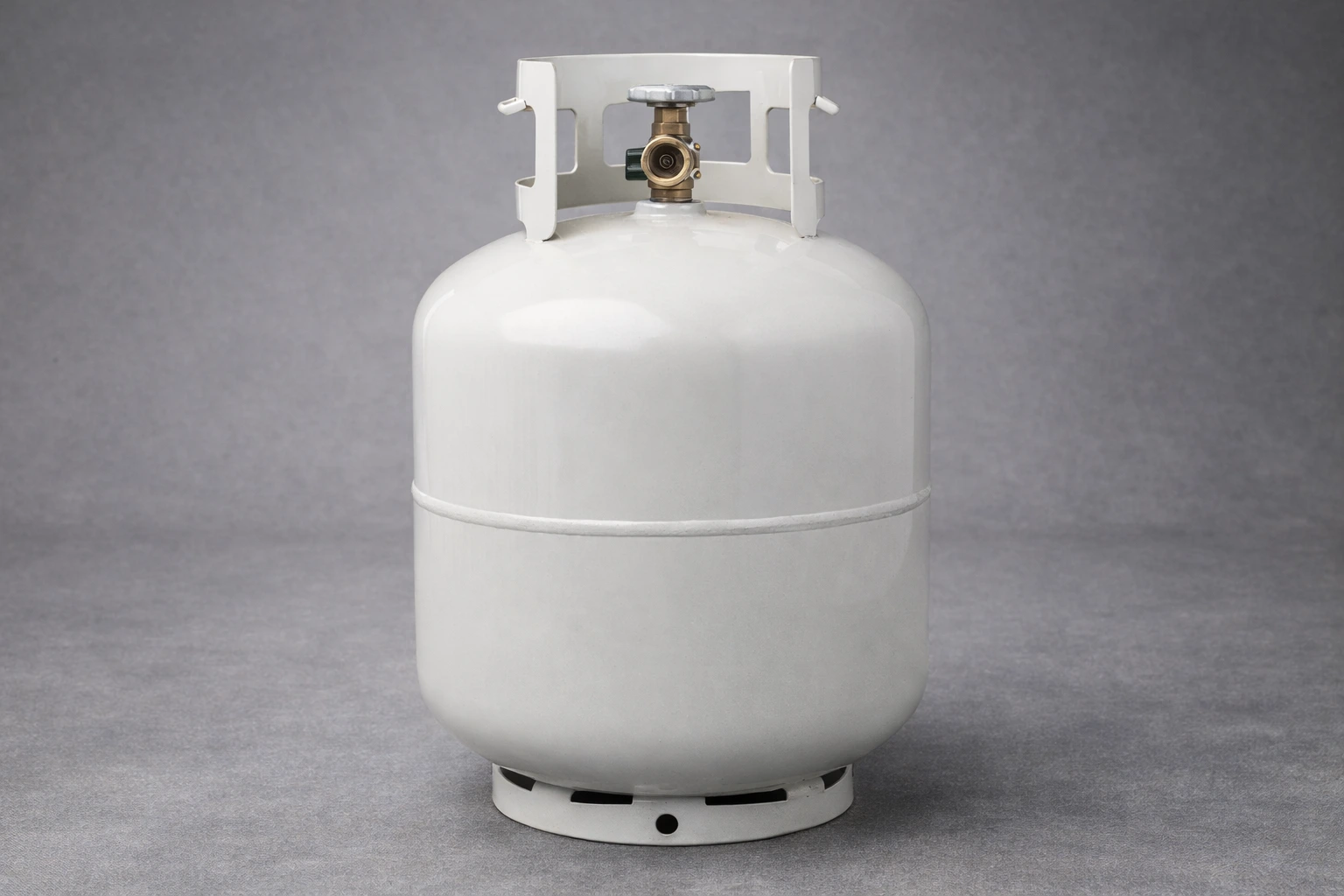
A standard 20 lb propane tank usually lasts about 18 to 20 hours on a typical gas grill, though actual runtime depends on the grill size, BTU output, heat settings, outdoor temperature, and how often you cook. Smaller grills running at medium heat may stretch beyond 20 hours, while larger high-BTU appliances can burn through propane much faster.
Most homeowners searching for how long a 20 lb propane tank lasts are trying to estimate runtime for a grill, patio heater, smoker, fire pit, camping stove, or portable heater. In real-world use, propane consumption varies based on appliance efficiency, cooking habits, weather conditions, and burner output.
Understanding how propane usage works can help you estimate runtime more accurately, avoid unexpectedly running out of fuel, and determine whether it makes more sense to refill or exchange your propane tank.
| Most Common Use | Typical Runtime |
|---|---|
| Gas grill | 18–20 hours |
| Patio heater | 8–12 hours |
| Fire pit | 7–12 hours |
| Propane smoker | 15–20 hours |
Quick Answer: Average Runtime for a 20 lb Propane Tank
A standard 20 lb propane tank typically provides:
- 18–20 hours on a standard gas grill
- 8–12 hours on a patio heater
- 15–20 hours on a propane smoker
- 7–12 hours on a propane fire pit
- 15–25 hours on a camping stove
Actual runtime varies depending on BTU output, weather conditions, and how aggressively the appliance burns fuel.
How Much Propane Is in a 20 lb Tank?
The “20 lb” label refers to the weight of the propane inside the tank when full, not the tank’s total size.
A standard 20 lb propane tank typically holds about 4.7 gallons of propane.
Each gallon of propane contains approximately 91,500 BTUs of energy.
That means a full 20 lb propane tank contains roughly:
4.7 × 91,500 = approximately 430,000 BTUs
This total BTU capacity is what ultimately determines how long the propane tank lasts.
How Propane Usage Is Calculated
Most propane appliances list their fuel consumption using BTUs per hour. Higher BTU appliances burn propane faster.
For example, if your grill uses 30,000 BTUs per hour, estimated runtime would look like this:
430,000 BTUs ÷ 30,000 BTUs/hour = approximately 14.3 hours
In real-world cooking, grills usually cycle burners on and off rather than operating continuously at maximum output. This is why many homeowners see closer to 18–20 hours of practical cooking time from a full tank.
How Long a 20 lb Propane Tank Lasts by BTU Rating
One of the biggest factors affecting propane runtime is the appliance’s BTU output.
| BTU Output | Estimated Runtime |
|---|---|
| 15,000 BTUs | 28–30 hours |
| 20,000 BTUs | 21–22 hours |
| 30,000 BTUs | 14–15 hours |
| 40,000 BTUs | 10–11 hours |
| 50,000 BTUs | 8–9 hours |
These estimates assume continuous operation at maximum output. Real-world runtime is often longer due to burner cycling and intermittent use.
How Long Does a 20 lb Propane Tank Last for Different Appliances?
Different propane appliances consume fuel at dramatically different rates.
- Gas grill: Usually 18–20 hours
- Patio heater: Around 8–12 hours
- Portable fire pit: Usually 7–12 hours
- Camping stove: Often 15–25 hours
- Portable propane heater: Around 20–40 hours depending on heat setting
- Propane smoker: Roughly 15–20 hours
- Turkey fryer: Around 15–20 hours
High-output appliances like patio heaters and fire pits generally consume propane much faster than grills or camping stoves.
What Affects How Long a Propane Tank Lasts?
Several factors can dramatically change propane consumption.
- Heat setting: High temperatures burn propane faster
- Number of burners: More burners increase fuel usage
- Grill size: Larger grills usually have higher BTU ratings
- Outdoor temperature: Cold weather affects propane pressure
- Wind conditions: Wind forces grills to work harder
- Cooking duration: Longer sessions naturally use more fuel
- Tank fill level: Some exchange tanks contain less propane than refill tanks
This is why two households using similar grills may experience completely different propane runtimes.
Does Cold Weather Affect Propane?
Yes. Cold weather can noticeably affect propane performance and pressure.
Propane must vaporize inside the tank before it can fuel your appliance. As temperatures drop, propane vaporization slows down, reducing internal tank pressure.
During colder weather, grills and heaters may:
- Take longer to preheat
- Struggle to maintain temperature
- Burn more fuel trying to stay hot
- Appear to run out faster
This effect becomes more noticeable during winter grilling or below-freezing temperatures.
What Is the 80% Rule for Propane Tanks?
Propane tanks are typically only filled to about 80% capacity for safety reasons.
This extra space allows propane to safely expand and contract as temperatures change. Filling a propane tank completely full could create dangerous pressure buildup inside the cylinder.
This is also why propane tanks sometimes seem larger internally than the amount of propane they actually hold.
Refill vs Exchange: Which Gives You More Propane?
Many homeowners assume propane exchange tanks are completely full, but that is not always the case.
| Option | Typical Fill Amount | Main Advantage | Main Drawback |
|---|---|---|---|
| Tank exchange | 15–18 lbs | Fast and convenient | May contain less propane |
| Tank refill | Closer to full 20 lbs | Usually better value | Requires refill station |
If maximizing runtime matters most, propane refills are often more economical than tank exchanges. You can also compare average propane tank exchange costs or find a cheap propane tank exchange near you before swapping your tank.
If you need a refill or exchange quickly, see our guide to finding a propane tank exchange near you.
How Many Grilling Sessions Does a Tank Usually Last?
For most homeowners, a standard 20 lb propane tank usually lasts about 7–10 average grilling sessions.
If you grill burgers, chicken, steaks, or hot dogs for 30–60 minutes at moderate temperatures, one tank may last several weeks during grilling season.
Longer cooks like smoking brisket, ribs, or pork shoulder can significantly reduce total runtime.
Why Propane Tanks Sometimes Seem to Run Out Suddenly
Many people notice their grill works normally one moment and suddenly loses heat the next.
This happens because propane pressure drops rapidly near the end of the tank. As propane levels become very low, internal vapor pressure decreases, especially during colder weather.
This can cause burners to weaken quickly even though a small amount of propane still remains inside the tank.
Experienced grill owners often keep a backup propane tank available to avoid interruptions during cooking.
How to Tell if Your Propane Tank Is Running Low
Common signs your propane tank is getting low include:
- Weak or uneven flames
- Longer preheating times
- Difficulty reaching cooking temperature
- Sputtering burners
- Reduced heat output
You can estimate propane levels using:
- The hot water method
- A propane tank gauge
- Weighing the tank
- Inline propane monitoring devices
For a detailed walkthrough, see our guide on how to tell if a propane tank is empty.
How Long Does Propane Last in Storage?
Unlike gasoline, propane itself does not go bad over time when stored properly inside a sealed tank.
As long as the propane cylinder remains in good condition and passes required inspections, the propane inside can remain usable for many years. You can also learn more about when propane tanks expire and how tank recertification works.
However, propane tanks should still be inspected periodically for:
- Rust or corrosion
- Damaged valves
- Dents or physical damage
- Leaks or unusual odors
- Expired certification dates
Proper outdoor storage and regular inspections help maximize both safety and tank lifespan.
How Long Do Propane Tanks Themselves Last?
A properly maintained propane tank can often last decades. Portable 20 lb propane cylinders typically require periodic recertification depending on local regulations.
Tanks showing severe rust, leaking valves, heavy dents, or structural damage should be replaced immediately.
Real-World Tips to Make Propane Last Longer
- Preheat your grill only as long as necessary
- Cook with the lid closed whenever possible
- Avoid constantly running all burners at maximum heat
- Protect grills from strong wind
- Refill tanks instead of exchanging when possible
- Keep a backup propane tank during grilling season
- Regularly clean burners for more efficient fuel usage
These small habits can noticeably extend runtime and reduce refill frequency.
Frequently Asked Questions
How long does a 20 lb propane tank last on a grill?
Most standard gas grills get approximately 18–20 hours of cooking time from a full 20 lb propane tank.
How long does a propane tank last at 30,000 BTUs?
A 20 lb propane tank running continuously at 30,000 BTUs typically lasts around 14–15 hours.
Can propane tanks suddenly run out?
Yes. Propane pressure often drops rapidly near the end of the tank, making it feel like the propane disappeared suddenly.
Is it cheaper to refill or exchange a propane tank?
Refilling is often cheaper per pound of propane and usually provides more fuel than exchange services.
Does propane expire?
Propane itself does not expire or degrade when stored properly inside a sealed tank.
How often should propane tanks be inspected?
Portable propane tanks should be inspected regularly for rust, leaks, valve damage, and expired certification dates.
Bottom Line
A standard 20 lb propane tank typically lasts about 18–20 hours on a normal gas grill, though actual runtime depends heavily on BTU output, appliance type, weather conditions, and cooking habits.
Understanding how propane consumption works, monitoring tank levels regularly, and knowing how BTU ratings affect fuel usage can help you avoid unexpectedly running out of propane during your next cookout or outdoor gathering.