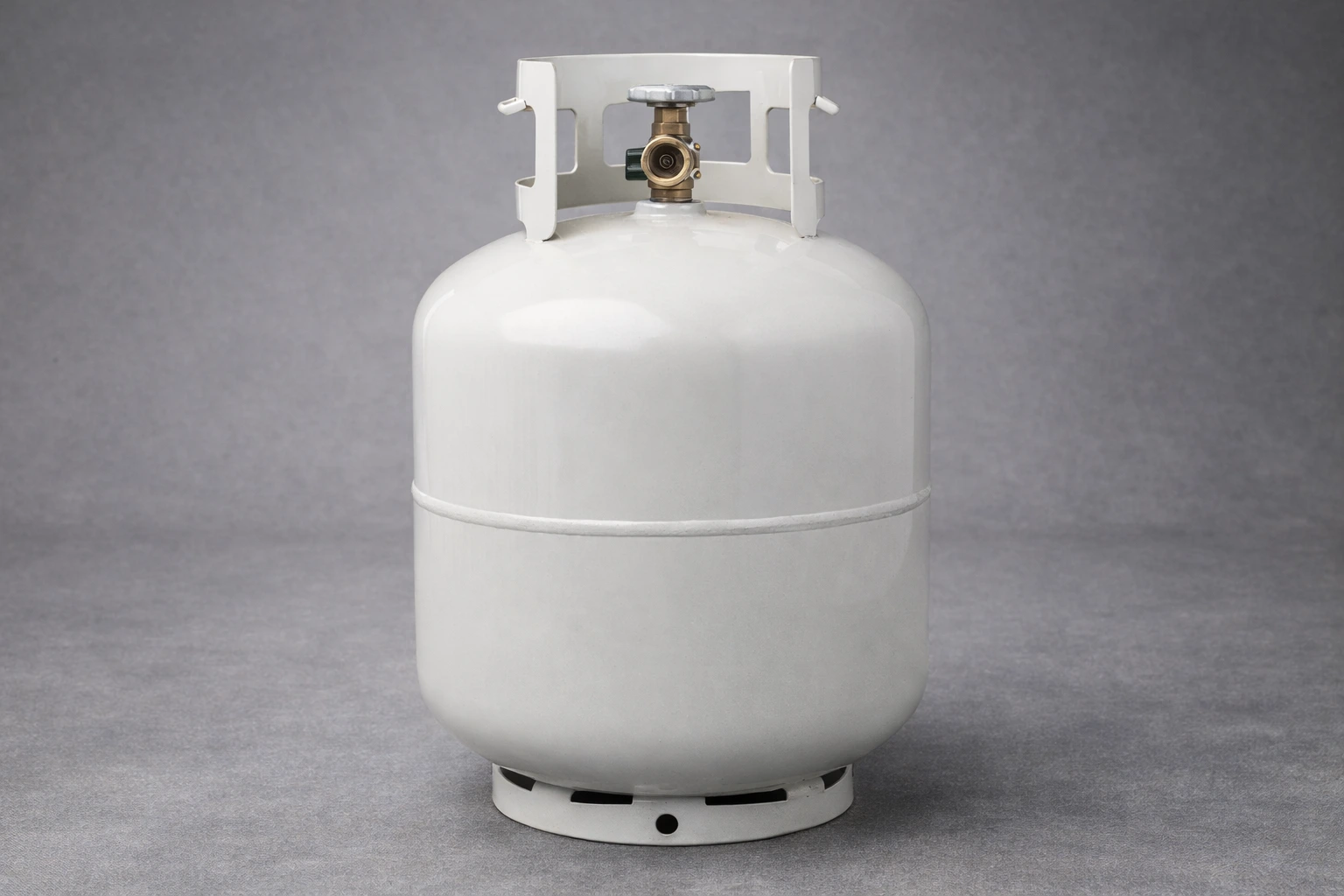
Yes, propane tanks do expire. Most standard propane cylinders used for backyard grills, patio heaters, smokers, and outdoor cooking equipment are certified for 12 years from the original manufacture date. After that period, the tank must either be recertified or replaced before it can legally be refilled.
This safety requirement helps ensure propane tanks remain structurally sound over time. Exposure to weather, moisture, rust, dents, and general wear can weaken older cylinders and increase safety risks.
Quick answer: Most propane tanks expire 12 years after the manufacture date stamped on the tank collar. After expiration, the tank usually needs recertification or replacement before it can be refilled.
If your tank is expired, many propane exchange programs allow you to swap it for a newer inspected cylinder. See our guide to finding a propane tank exchange near you.
Common signs a propane tank may need replacement: heavy rust, dents, damaged valves, leaks, missing labels, or an expired certification date.
Do Propane Tanks Expire?
Yes. Most portable propane tanks used for grills and outdoor appliances eventually expire and require inspection or replacement.
For standard 20 lb propane cylinders, federal regulations in the United States typically allow:
- 12 years from the original manufacture date
- Additional certification periods after recertification
After the initial certification period ends, the tank usually must be recertified by an approved professional before it can legally be refilled.
Many refill stations will refuse to refill expired propane cylinders for safety and regulatory reasons.
How Long Are Propane Tanks Good For?
A standard portable propane tank is usually certified for:
| Tank Status | Typical Certification Period |
|---|---|
| Original manufacture | 12 years |
| After recertification | Usually 5 years |
| Additional recertifications | Varies by inspection type |
The exact recertification period can vary depending on the inspection method and local regulations.
Larger permanently installed residential propane tanks often follow different inspection and maintenance schedules than portable grill cylinders.
Where to Find the Expiration Date on a Propane Tank
The expiration timeline is based on the original manufacture date stamped on the propane tank collar.
The collar is the metal ring around the top of the tank that protects the valve.
The manufacture date is usually stamped in a month-year format.
Examples:
- 06 20 = June 2020
- 09 18 = September 2018
A propane tank manufactured in June 2020 would typically remain certified until June 2032 before recertification is required.
How to Read Propane Tank Recertification Markings
After a propane tank is recertified, additional markings are usually stamped onto the collar.
These markings often include:
- The recertification date
- The inspection method used
- The inspector or facility identification
You may see letters beside the date that indicate the recertification method.
For many homeowners, these markings can appear confusing, which is one reason propane exchange programs are popular.
Exchange services allow you to swap older tanks for newer inspected cylinders without worrying about the certification process yourself.
What Happens if a Propane Tank Expires?
If a propane tank reaches its expiration date, most refill stations will refuse to refill it until the tank is recertified.
This does not necessarily mean the tank is unsafe immediately, but it does mean the cylinder has reached the end of its current certification period.
At that point, you generally have three options:
- Recertify the tank
- Exchange the tank
- Replace the tank completely
For many homeowners, exchanging the tank is the fastest and easiest solution.
Can You Exchange an Expired Propane Tank?
Yes. Most propane exchange programs accept expired propane tanks as long as they are not leaking, heavily rusted, or severely damaged.
This is one reason propane exchange services are so popular for grill owners.
Instead of dealing with inspections and recertification paperwork, you simply swap the old cylinder for a newer inspected tank.
You can compare average pricing in our guide to propane tank exchange costs or look for a cheap propane tank exchange near you.
Should You Recertify or Replace an Old Propane Tank?
For many homeowners, exchanging or replacing an old propane tank is easier than recertifying it.
However, recertification may still make sense if:
- The tank is still in excellent condition
- You have access to a local recertification service
- You frequently refill rather than exchange tanks
If convenience matters most, propane exchange programs are usually the simplest option.
Signs a Propane Tank Should Be Replaced Immediately
Some propane tanks should not be recertified or reused at all.
Replace the tank immediately if you notice:
- Heavy rust or corrosion
- Deep dents or structural damage
- Damaged or leaking valves
- Strong propane odor
- Bulging tank walls
- Missing or unreadable markings
Damaged propane cylinders can create serious safety hazards and should not continue being used.
Does Propane Itself Expire?
No. Propane fuel itself does not expire or degrade over time when stored properly inside a sealed tank.
In most cases, it is the propane cylinder that expires — not the propane inside it.
This is one advantage propane has over fuels like gasoline, which can break down during long-term storage.
How Long Does a Propane Tank Last Before Running Empty?
A standard 20 lb propane tank usually lasts around 18–20 hours on a typical backyard gas grill.
Actual runtime depends on:
- BTU output
- Heat settings
- Outdoor temperature
- Wind conditions
- Cooking duration
For a full breakdown, see our guide on how long propane tanks last.
How to Tell if a Propane Tank Is Empty
If your grill suddenly loses heat or produces weak flames, the tank may simply be running low rather than expired.
You can estimate propane levels using:
- The hot water test
- A propane gauge
- Weighing the tank
- Checking appliance performance
See our complete guide on how to tell if a propane tank is empty.
Propane Tank Safety Tips
- Store propane tanks outdoors in a well-ventilated area
- Keep cylinders upright at all times
- Inspect tanks regularly for rust or leaks
- Never store propane tanks near open flames
- Protect tanks from excessive heat exposure
- Replace damaged valves immediately
Proper storage and regular inspections help improve both safety and tank lifespan.
Frequently Asked Questions
How long are propane tanks good for?
Most standard portable propane tanks are certified for 12 years from the manufacture date before recertification is required.
Where is the expiration date on a propane tank?
The certification date is stamped on the tank collar near the valve in a month-year format.
Can you refill an expired propane tank?
Most refill stations will not refill an expired propane tank unless it has been properly recertified.
Can you exchange an expired propane tank?
Yes. Many propane exchange programs accept expired tanks as long as they are not severely damaged or leaking.
Does propane itself expire?
No. Propane fuel itself does not expire when stored properly inside a sealed tank.
Should I recertify or replace an old propane tank?
For many homeowners, exchanging or replacing an old tank is easier than recertifying it, especially if the tank shows signs of wear or corrosion.
Bottom Line
Most propane tanks expire 12 years after the original manufacture date stamped on the tank collar. After that point, the tank usually must be recertified or replaced before it can legally be refilled.
Fortunately, many propane exchange programs allow you to swap expired tanks for newer inspected cylinders quickly and conveniently. Regularly checking your propane tank’s condition, certification date, and overall safety can help prevent problems and keep your outdoor appliances running safely.